Teaching Love at Home: A Valentine’s Day Homeschool Story About Faith, Saints, and the Everyday Mess of Motherhood
Some mornings, homeschooling looks like soft sunlight through the window, children eagerly opening books, and a warm cup of coffee that stays warm.
Other mornings… it looks like spilled markers, a half-erased math lesson, a toddler asking for a snack again, and me wondering if anyone absorbed anything I said before noon.
And honestly? Most days are a mix of both.
That’s why, when Valentine’s Day starts creeping into our homeschool rhythm, I always pause and ask myself one important question: What do I actually want my children to learn about love?
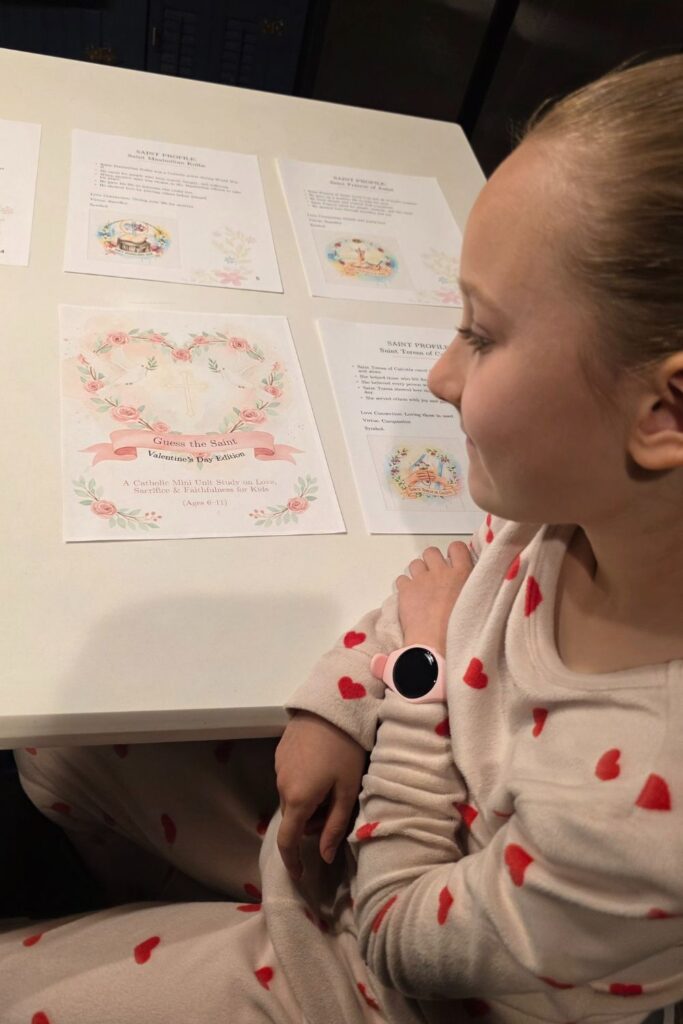
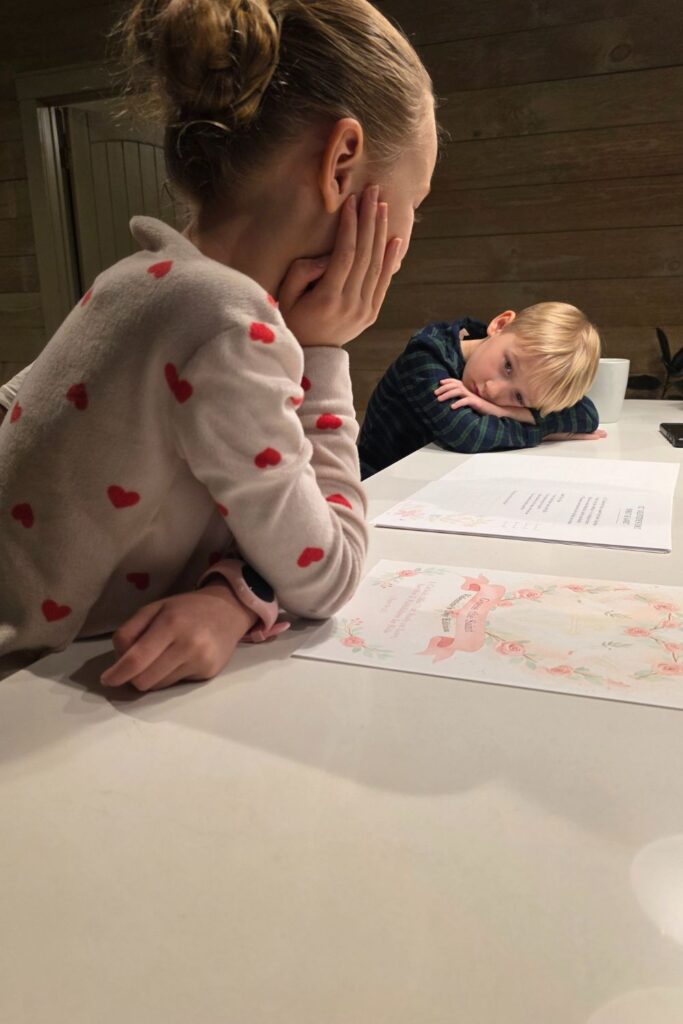
Because love isn’t just hearts and candy.
It’s not just cards and pink decorations.
Love is lived.
Love is practiced.
Love is taught—quietly, imperfectly, right in the middle of our ordinary days.
Valentine’s Day, But Make It Meaningful
This year, I noticed something familiar. My kids were excited about Valentine’s Day, but their excitement was mostly about treats and crafts. There’s nothing wrong with that—those things are fun—but I felt that nudge in my heart that said, there’s more here.
So instead of fighting the excitement, I leaned into it.
We talked about Saint Valentine, not as a cartoon figure, but as a real person who chose faithfulness and courage, even when it was difficult Guess the Saint St. Valentine’s…. And that conversation opened the door to something deeper.
What does love look like when it costs something?
Homeschooling Is About Formation, Not Perfection
One thing homeschooling has taught me (over and over again) is that learning doesn’t happen in straight lines. It happens through conversations, interruptions, and sometimes through questions that catch us off guard.
When we started exploring stories of saints—Saint Valentine, Saint Maximilian Kolbe, Saint Teresa of Calcutta, Saint Francis of Assisi, and Saint Gianna Beretta Molla Guess the Saint St. Valentine’s…—my children didn’t just memorize facts.
They asked real questions.
“Why would someone give their life for another person?”
“Was Saint Gianna scared?”
“Does love always mean doing something big?”
Those questions mattered more to me than finishing the lesson “on time.”
Teaching Love Through Stories (Not Lectures)
One of the most powerful tools in our homeschool is storytelling.
Saints are incredible teachers because their lives show children that love is active:
- Love shows up as faithfulness.
- Love looks like sacrifice.
- Love feels like compassion.
- Love practices humility.
- Love gives itself away for others Guess the Saint St. Valentine’s….
We read short stories.
We paused often.
We connected their choices to everyday moments at home.
When Saint Maximilian Kolbe chose to take another man’s place, my son said, “That’s like when I give my sister the last cookie… but way harder.”
Exactly.
Children understand love best when they can connect it to their own world.
Real Life Application: Love at Home Isn’t Always Pretty
Here’s the honest part.
Teaching love doesn’t mean my children suddenly stop arguing. It doesn’t mean they always speak kindly or share joyfully. And it definitely doesn’t mean I get it right every time.
Some days, love looks like:
- Apologizing to my kids when I lose my patience.
- Asking them to try again after unkind words.
- Practicing forgiveness at the dinner table.
That’s why I love framing lessons around virtues, not perfection.
When we talked about compassion, we looked for small acts of kindness during the day. When we talked about sacrifice, we noticed moments when someone chose others first—even if it felt uncomfortable.
Love became something visible.
Hands-On Learning That Sticks
In our home, learning always sinks in deeper when little hands are involved.
Coloring, cutting, journaling, matching activities, and simple crafts help children slow down and reflect. Activities like creating “Hearts of Love” or designing cards focused on kindness gave my kids space to express what they were learning without pressure Guess the Saint St. Valentine’s….
And while they colored, they talked.
Those conversations—the unplanned ones—are where the real learning happens.
A Gentle Rhythm for Faith-Based Homeschooling
One thing I’ve learned as a homeschooling mom is that short, meaningful units often work better than long, overwhelming lessons.
This kind of study can be:
- A one-day activity when life is busy
- A three-day mini unit
- Or a week-long reflection woven into daily routines Guess the Saint St. Valentine’s…
Faith doesn’t need to feel heavy or complicated. It can grow naturally through gentle repetition and lived example.
What I Hope My Children Remember
Years from now, my children probably won’t remember every worksheet.
But I hope they remember this:
- That love is shown through actions.
- That faithfulness matters.
- That courage sometimes feels scary.
- That serving others is a form of joy.
And I hope they remember that learning happened not just at the table—but through how we lived together.
Why I Create Resources Like This
I create homeschool resources because I am the mom in the middle of it all.
I know what it feels like to want your children to grow in faith and character, while also managing real life. I design materials that support parents—not overwhelm them—and that invite conversation rather than demand perfection.
If you’re raising thoughtful children and trying to teach them what love really means, you’re not alone.


It is designed to help families explore love, faith, sacrifice, and virtue in a way that feels warm, accessible, and meaningful—right where learning actually happens: at home.
Until then, keep showing love in the small moments.
They’re shaping more than you realize. 💗
You May Also Like:
 The Difference Between “I’m Confused” and “This Doesn’t Make Sense”
 Children Become What They Repeatedly See
 Creating a Cozy, Faith-Filled Christmas at Home: Traditions That Help Our Family Slow Down
 Should Homeschool Families Accept an ESA? Education Savings Accounts, Tax Credits, and Homeschool Freedom
 🌿 How to Support a Match Without Encouraging Early Dating
 Week 40 Family Challenge: Take a Siesta Every Day (5–30 Minutes)
 Week 39 Family Challenge: 3 Minutes of Stretching (Every Day)
 Confidence Is Quieter Than You Think